Chainflow
Before the Constitution: 3 Years of Solana Governance Nobody Saw
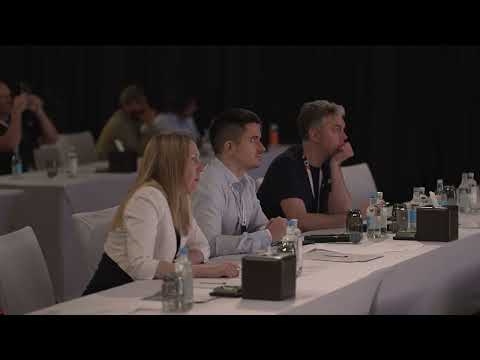
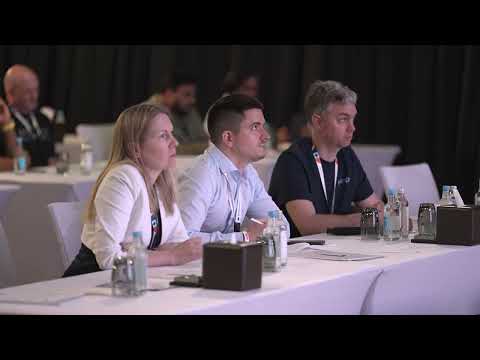
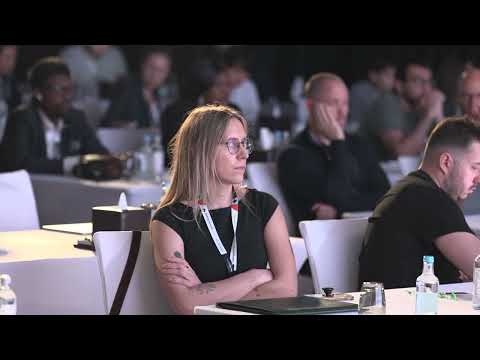
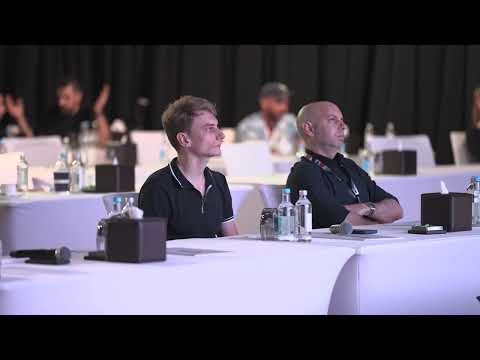
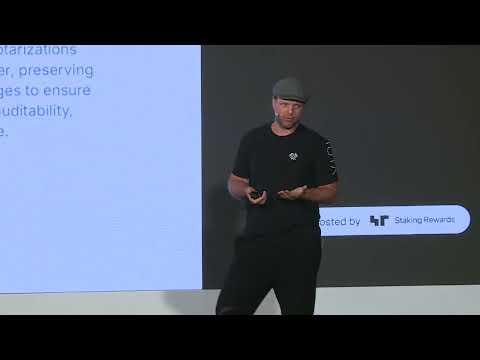
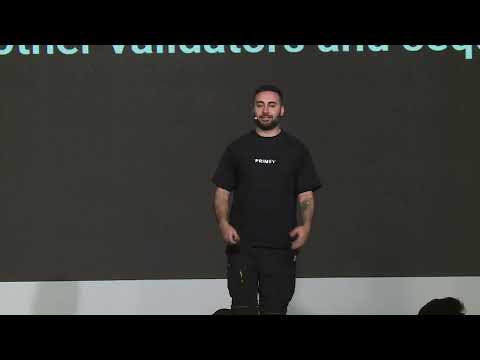
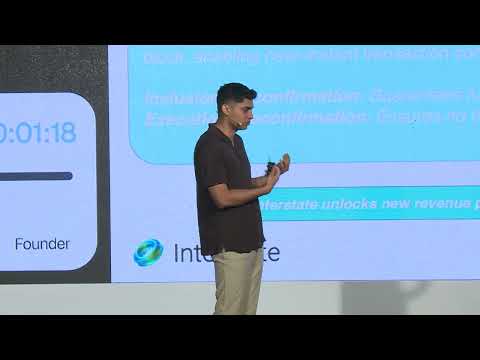
by @cfl0ws3 SGPs are in discussion. They'll be the first proposals voted on through Solana's new governance tooling: a constitution, on-chain voting, stake-weighted quorum, voter override.What may not be obvious is that this is the culmination of work that began almost exactly 3 years ago. It was started by a group of validators who could see that Solana would eventually need a governance process, and decided not to wait until the need was obvious. Most of it happened on a Discord server, with almost nobody watching.This is where it started.Vienna, summer 2023A group of Solana community members (Foundation reps, protocol builders, and validators) were invited to the Blockchain Infrastructure Forum in Vienna. A protocol-agnostic gathering, reserved for stakeholders working on infrastructure and its maturation.One breakout session was about governance. The conversation focused on early decentralized governance experiments and theory. Cosmos came up repeatedly because it had arguably the most mature process at the time.Solana had nothing comparable. That was the main takeaway for the Solana members in attendance. Nothing at that time forced the issue. There was no contentious proposal, no crisis, no pressure from anyone. Just a recognition that a network of Solana's scale would need a way to make decisions about itself, and that building one after you need it is much harder than building one before.The Governance Think TankA few weeks later, inspired by that conversation, Michael Hubbard (then operating the Laine validator, now with SOL Strategies) started the Solana Governance Think Tank. It was the first structured attempt at building a real governance process for Solana.Participation came almost entirely from independent validators. Chainflow, H2O Nodes, and a handful of others.The work focused on the Who, What, When, Why, and How of a governance process.It surfaced publicly for the first time on the July 31, 2023 Community-Led Validator Call, the first time governance was seriously discussed on a validator call. Everything else happened in the Solana Staking Alliance Discord.The first votes, and the question of who gets to voteThose conversations produced the first on-chain votes, held mainly to confirm the structural definitions the Think Tank had drafted. Michael built a tool that let validators vote on-chain against stake-weight snapshots.Most of it was uncontentious. One question wasn't: who gets to vote.3 proposals were on the tableProposal A: validators only.Proposal B: validators and stake accounts.Proposal C: validators, stake accounts, and other stakeholders.The case for A was serious and well argued. Validators are custodians of the chain, they're tasked with staying current on technical developments, and they're a large but manageable community. Token-holder voting would likely mean lower engagement, requiring a lower quorum and weaker security overall. And enforcement matters: the chain does what a supermajority of stake chooses to do, so the people enforcing chain state should be the ones voting.Chainflow argued for B, with C as the direction to move toward. Our reasoning was that the process should be as inclusive as practically possible, and that starting with stake accounts was the achievable first step.The clearest articulation of the mechanism came out of an exchange in that thread. A Solana app developer argued that token-holders should be able to override validators as a check against validators voting for their own benefit. We pushed to pin down exactly what that would look like: validators and token holders both vote, the validator votes with the tokenholder's stake weight, and the tokenholder can override by voting for themselves.That is voter override, described in September 2023, and the system in use today. The debate was abstract at that time, the group was working through questions that wouldn't become urgent for another 18 months, on the assumption that they eventually would. The vote went to Proposal A. Validators only.It looks obvious in hindsight that stakers should vote. It took 18 months of running the alternative for the ecosystem to arrive there, that's what these early experiments were for.The pattern held at BlockZero 2023, where governance got a panel and a breakout session. Both were sparsely attended. The same small group of validators who had been in the Discord showed up, talked to each other, and went home. SIMD-0228 changed everythingIn early 2025, SIMD-0228 proposed a significant reduction to Solana's inflation rate.It arrived as a SIMD because the early governance work had deliberately aligned the process with the SIMD track, specifically for proposals touching protocol economics. SIMD-0228 landed squarely in scope.Inflation reduction hits validator revenue directly, so the process came into full public view for the first time. The debate was intense. Turnout was far higher than any previous vote: run on the same tooling that had handled the quiet votes before it. Chainflow hosted one of the first public debates on the proposal, an X Space held while most of the ecosystem was still working out what SIMD-0228 actually did. We also published our own analysis and rationale on our blog. Eventually, SIMD-0228 was voted down. But it did something the quiet years hadn't: it proved the process mattered, and it exposed exactly where the process fell short. Governance fatigue, and the Accelerate sessionsThe vote exhausted the community and governance went mostly silent afterward.To restart it, Chainflow organized a governance conversation during Solana Accelerate 2025 in New York. Attendees spanned the ecosystem: Foundation and protocol reps, investors, validators. Nick Almond and Tushar Jain, architects of the process that followed, were both in the room. The groundwork for the system now being used to vote on the current SGPs was laid in that session. Exo Tech documented the scope of the on-chain tooling the group defined, then merged efforts with related work Turbin3 had already started.In parallel, Nick and Tushar led development of the Solana Constitution with support from a handful of community members. They presented it publicly for the first time at BlockZero in Abu Dhabi in December 2025.Chainflow also organized the second governance session at Accelerate in Miami earlier this year, where the group agreed to make it an annual gathering. It was during that session that final preparations were made to launch the new process and the first 3 SGPs.The teams then worked with roughly a dozen validator operators, many of them running the NCN nodes the process depends on, to test the system end to end.What this actually tookSo here we are, 3 SGPs are now in discussion. They'll be voted on with tooling that works, under a constitution that exists, by validators and stakers who both have a voice.None of that was inevitable.It came from a breakout session at a conference in Vienna. A Discord server. A voting tool one validator built himself. 18 months of low-turnout votes almost nobody noticed. A failed proposal that made everyone care. Two side-room conversations at conferences. And a small group of people who kept showing up when there was no visible reason to.The people who did that work were overwhelmingly independent validators. Not because independents are more virtuous, but because the operators with the most to lose from getting governance wrong had the least ability to absorb a bad outcome. Showing up was the only available insurance.That's worth remembering as governance becomes legitimate infrastructure. The process now has a constitution, real tooling, and public attention. It started with none of those.But here's the part worth being optimistic about: it worked. A handful of validators in a Discord server built something that now governs one of the largest decentralized networks in the world. They started building it before anyone was asking for it, that's the part most likely to get lost. The process didn't emerge in response to a crisis, it was there when the crisis arrived. Stakers can override their validators, nobody controls a treasury. The rules are written down, and they were written down by the people the rules apply to.3 years ago, none of that existed. Someone had to decide the question was worth answering.3 SGPs are on the floor now, and the votes open August 23. Whatever the outcome, that's what 3 years of quiet work bought: a network that can make decisions about itself, in public, by its own rules.We'll be voting, and publishing our rationale, the same as always.
 by Mirko Schmiedl

 Simply Staking