Proof of Stake Research & Guides

Robinhood Chain Explained

Robinhood Chain Explained

Jul 28, 2026
The Tie Acquires Staking Rewards

The Tie Acquires Staking Rewards

Jul 19, 2026
Risk Assessment Case Study with Valantis stHYPE

Risk Assessment Case Study with Valantis stHYPE

Jun 25, 2026
DAYS 2026 Update: New York → Singapore

DAYS 2026 Update: New York → Singapore

May 20, 2026
Staking Rewards DeFi Ratings Now Live on Yield.xyz

Staking Rewards DeFi Ratings Now Live on Yield.xyz

May 10, 2026
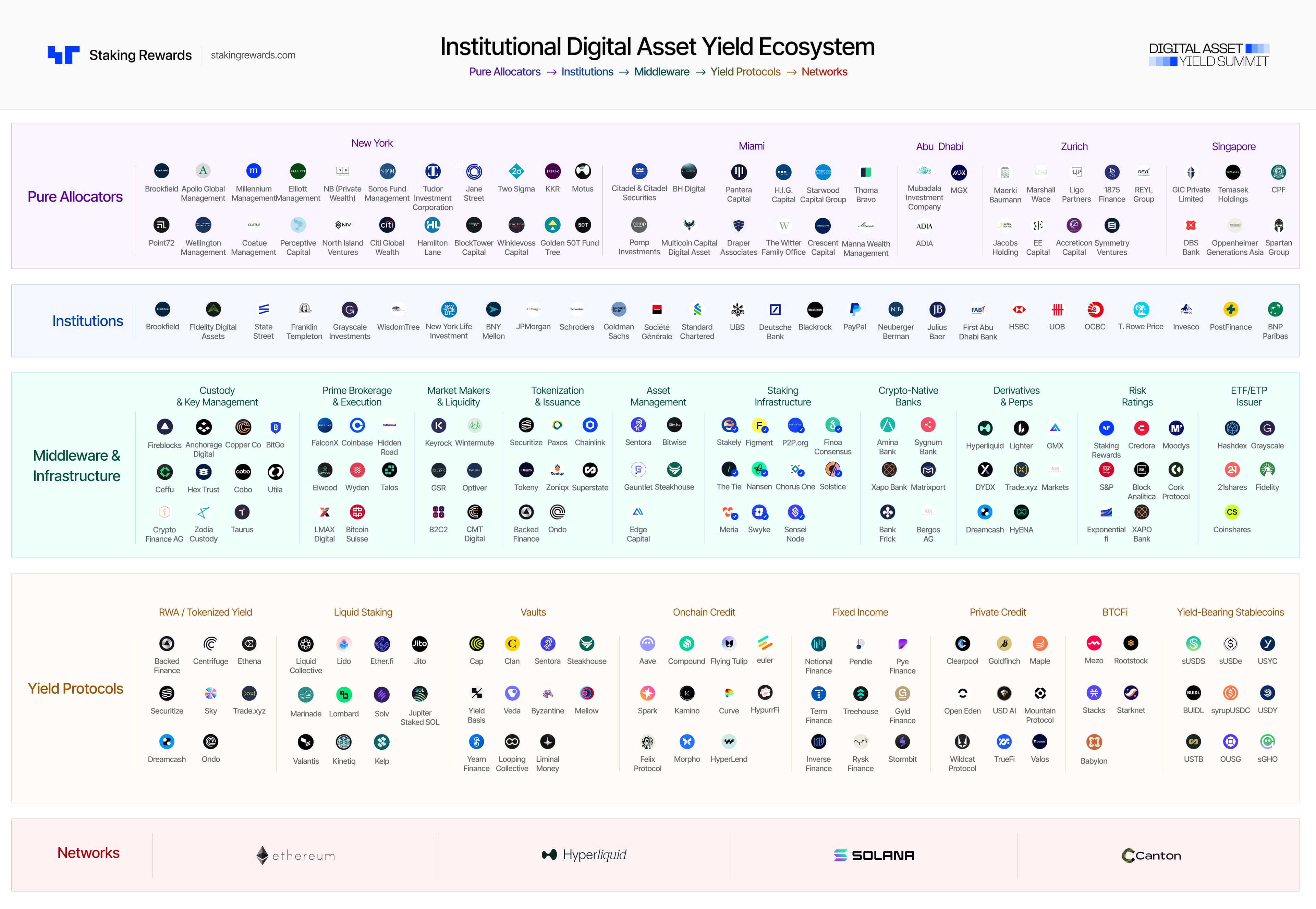
Mapping the Institutional Digital Asset Yield Ecosystem

Mapping the Institutional Digital Asset Yield Ecosystem

Mirko Schmiedlby Mirko Schmiedl
Mar 16, 2026
Introducing the First 25 Independent DeFi Yield Ratings

Introducing the First 25 Independent DeFi Yield Ratings

Mirko Schmiedlby Mirko Schmiedl
Mar 16, 2026
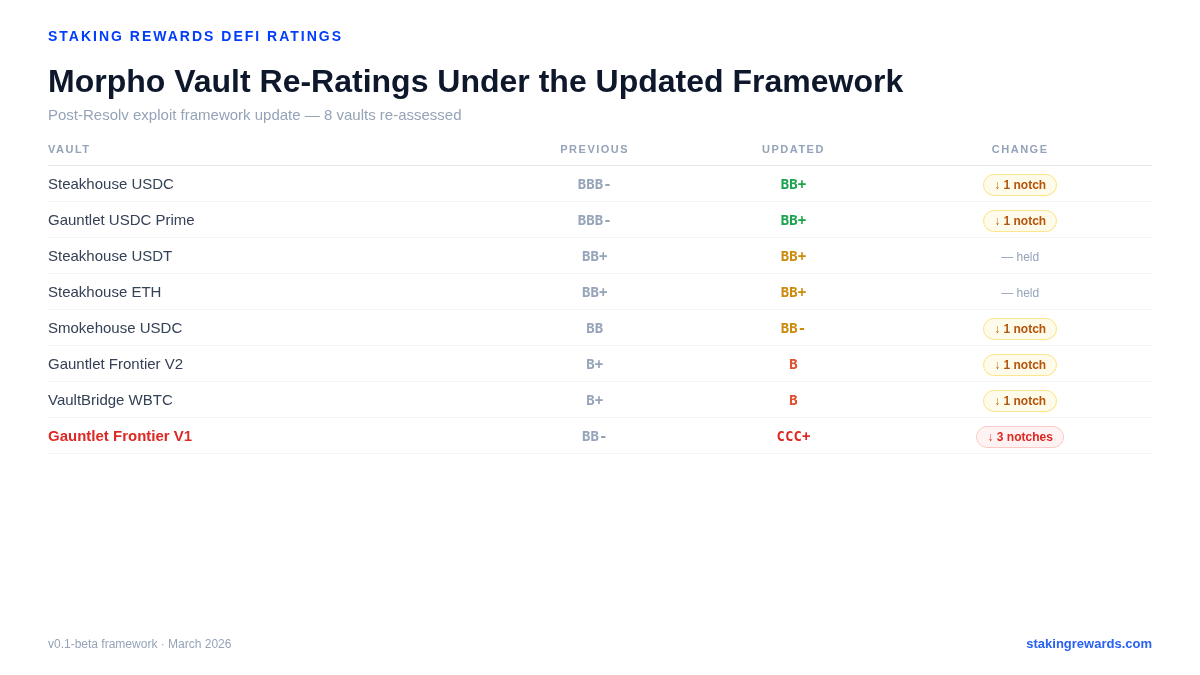
Morpho Vault Re-Ratings Under the Updated Framework

Morpho Vault Re-Ratings Under the Updated Framework

Mar 11, 2026

Staking Summit is Evolving into Something Much Bigger. Introducing the Digital Asset Yield Summit (DAYS).

Staking Summit is Evolving into Something Much Bigger. Introducing the Digital Asset Yield Summit (DAYS).

Mirko Schmiedlby Mirko Schmiedl
Feb 9, 2026
Monad Explained: Everything You Need to Know About the High Performance Layer 1

Monad Explained: Everything You Need to Know About the High Performance Layer 1

Simply StakingSimply Staking
Oct 7, 2025

VSP Hub

Verified Staking Provider
How Staker Override Works on Solana, and Why You Should Use It

How Staker Override Works on Solana, and Why You Should Use It

ChainflowChainflow
Aug 28, 2026
Stake TRX on Trezor: Native Staking Now Live

Stake TRX on Trezor: Native Staking Now Live

P2P.orgP2P.org
Aug 26, 2026
Figment Selected as Staking Provider for Bitbank's Staking Service

Figment Selected as Staking Provider for Bitbank's Staking Service

FigmentFigment
Aug 26, 2026
Q-Day in Crypto: Which Blockchains Are Ready?

Q-Day in Crypto: Which Blockchains Are Ready?

Coinage x DAICCoinage x DAIC
Aug 25, 2026
Crypto ETF vs Tokenized Funds: What Investors Need to Know

Crypto ETF vs Tokenized Funds: What Investors Need to Know

Starke FinanceStarke Finance
Aug 25, 2026
How Staker Override Works on Solana, and Why You Should Use It
ChainflowChainflow

How Staker Override Works on Solana, and Why You Should Use It

Three SGPs are on the floor. If you stake $SOL, your vote has already been cast - by your validator, on your behalf, whether or not you agree with it.You can change that. Here's how, and why we think you should.The default is inheritanceSolana's governance process gives every staker a vote weighted by their stake. But by default, that vote follows the validator you've delegated to.If you stake with Chainflow and Chainflow votes yes on a proposal, your stake counts as yes. You don't have to do anything. The vote happens.That default is reasonable - most stakers won't follow every proposal, and passive delegation shouldn't mean disenfranchisement. But it's a default, not a rule.Vote sovereigntyThe voting process has what's called vote sovereignty. You, the staker, have the final say on your own vote.If you disagree with how your validator voted, you can override it. Switch your vote to whatever you think is right. Your validator doesn't get consulted and can't stop you.This is one of the more consequential design decisions in Solana's governance process, and it's not obvious that it would have gone this way. When the question of who gets to vote was first debated in 2023, the majority of validators favored a validators-only model. We argued for staker inclusion and lost that vote.Three years later, it's the system, and we're glad it is.How to overrideThere are two waysGovernance UI. Connect your stake account at governance.solana.com/proposals and vote directly.CLI, using the svmgov CLI:svmgov cast-vote --proposal-id --for-votes --against-votes --abstain-votes The proposal ID is displayed on the governance UI when a proposal opens for voting.You can split your voteVoting isn't binary. Both stakers and validators can allocate stake weight across positions. Votes are weighted in basis points, and they must sum to 10000.Full support:--for-votes 1000080% confident, 20% unsure:--for-votes 8000 --abstain-votes 2000Mostly opposed, with reservations:--for-votes 3000 --against-votes 7000That last one is roughly how we voted on SGP-2. We're largely against doubling disinflation, but the argument has real merit and a block vote would have flattened a position we don't actually hold into one we don't hold either.Most validators block vote. The mechanism exists for a reason.The part that's genuinely confusingHere's where it gets complicated, and we'd rather flag it than let you find out afterward.A validator's split vote applies only to stake that hasn't already been voted directly by the staker. If you override, your stake comes out of your validator's pool before their percentages are applied to the rest.That's the correct behavior. But it creates a question with no clean answer: as a staker, how do you know whether your preferred position is already reflected in your validator's split, before the final tally?You don't, there's no way to see this in advance.So the practical guidance is simple. If you want your vote to count as a staker, override directly. Don't assume your validator's split covers your position. It might. You can't verify it, and by the time you can, voting has closed.Why botherQuorum for these proposals is one-third of active stake. Passage requires a two-thirds supermajority of participating stake.Those are meaningful thresholds. A governance process that nobody participates in isn't a governance process - it's a formality that a small number of large operators resolve among themselves.The whole argument for staker override, the one that lost in 2023 and won eventually, was that stake ownership should carry a voice, not just a yield. That argument only holds up if people use it.If you stake with us and you disagree with how we voted, override us. That's the system working exactly as intended.Chainflow publishes our rationale on every governance proposal we vote on. Here's how we voted on the current Solana Governance Proposals:SGP-1, 100% yes, not perfect yet a good starting pointSGP-2, 30% yes, 70% no, the same way we voted for SIMD-0228SGP-3, 100% yes, a more efficient chain benefits everyoneVote at governance.solana.com

Aug 28, 2026

Institutional-Grade Research Delivered to Your Inbox

In-Depth Research ReportsIn-depth analysis on staking protocols and yield strategies
Risk Assessment ReportsComprehensive risk evaluations for capital allocators
Exclusive Events & Market IntelligenceEarly access to Digital Asset Yield Summit, and more

Join 12,000 institutional allocators worldwide. No spam, unsubscribe anytime.
Institutional Research Reports