Robinhood Chain Explained
TL;DR;
- Robinhood's L2 is live — and it pays. Robinhood Chain went to mainnet on July 1 with Uniswap, Morpho, Lighter and Arcus already onboard. Robinhood Earn now lends USDG at an estimated 7% APY from a self-custody wallet, minimum $1.
- We rated the USDG vaults — all three are high-risk. The Steakhouse-curated Morpho vaults behind that yield (including the leveraged Turbo USDG) score CCC to CCC+, mostly because the chain and its lending markets are only weeks old. Read the risk breakdown before you deposit.
- No token, no airdrop — but real incentives exist. There is no Robinhood Chain token; treat any "claim" as a scam. What's real: Lighter's $11M LIT campaign with a 2x multiplier via Robinhood Wallet, and a signaled Arcus token for early users. Bridging in takes minutes via Jumper, ~2 seconds via Across.
Robinhood Chain Explained: What It Is, How to Earn on It, and the Easiest Way to Bridge
Robinhood Chain, the Layer 2 blockchain from the company best known for commission-free stock trading, launched its public mainnet on July 1, 2026. In its first weeks it has already attracted major DeFi protocols, a native stablecoin, and a stablecoin yield product paying an estimated 7% APY. This guide covers what Robinhood Chain is, what you can actually earn on it today, and the most convenient way to bridge funds over.
What Is Robinhood?
Robinhood is a US financial services company founded in 2013 that popularized commission-free trading of stocks and ETFs through its mobile app. What started as a simple brokerage has grown into a broad investing platform: today it offers stocks, options, futures, retirement accounts, a credit card, and a large crypto business, serving roughly 28 million funded customers across 38 countries.
Crypto has become one of Robinhood's main growth engines. Beyond simple buying and selling, the company operates crypto staking for assets such as ETH, SOL, and ADA, acquired the Bitstamp exchange in 2025 to expand internationally, and offers a self-custody app called Robinhood Wallet. In Europe, it introduced tokenized "Stock Tokens" that track the value of US equities. That tokenization push is what ultimately led the company to build its own blockchain.
What Is Robinhood Chain?
Robinhood Chain is an Ethereum Layer 2 network built with Arbitrum's technology stack. Robinhood announced it in mid-2025, opened a public testnet in February 2026 that processed more than 200 million transactions, and launched the public mainnet on July 1, 2026.
The chain's stated purpose is to bring real-world assets onchain. Its key characteristics:
- Built for tokenized assets. Robinhood's Stock Tokens are issued on the chain and can be traded 24/7 in over 120 countries (subject to local rules), used as collateral, or deposited into lending pools, things a traditional brokerage account can't do.
- Ethereum security, Arbitrum speed. As a rollup settling to Ethereum, it inherits Ethereum's security while offering very fast block times (around 100 milliseconds, per launch coverage) and low fees. Gas is paid in ETH, and the chain ID is 4663.
- Open DeFi ecosystem. Unlike the closed Robinhood app, the chain is permissionless. Uniswap, 1inch, the perpetuals exchanges Lighter and Arcus (built by the dYdX team), and lending infrastructure from Morpho were live at launch, with Chainlink serving as the official oracle and cross-chain layer.
- A native stablecoin. USDG, the dollar-backed stablecoin from the Paxos-founded Global Dollar Network, is natively issued on Robinhood Chain and acts as the default dollar asset across its DeFi products.
Within the broader Robinhood ecosystem, the chain is the self-custody counterpart to the brokerage app: the app remains the regulated, custodial venue, while Robinhood Wallet is the front door to the chain, where users hold their own keys and interact with open protocols directly.
Current Earning Opportunities on Robinhood Chain
Although the mainnet is only weeks old, there are already several practical ways to put assets to work.
Robinhood Earn: ~7% APY on USDG
The flagship yield product is Robinhood Earn, which is rolling out to eligible US users. It lets you lend USDG from a self-custody wallet at an estimated 7% APY, with a minimum of just $1. Under the hood, deposits flow into lending markets powered by Morpho, one of DeFi's largest lending protocols, and the position carries insurance underwritten by Lloyd's of London and RELM against covered cyber or smart-contract exploits. The rate is variable, it reflects real borrowing demand, not a fixed promotional rate.
Lending, liquidity, and trading rewards
Beyond Earn, the open DeFi ecosystem offers the usual onchain earning routes, now with some unusual collateral:
- Lending markets. Morpho-based markets on the chain accept assets including Stock Tokens, so tokenized equities can earn lending yield or serve as collateral for borrowing.
- Providing liquidity. Uniswap pools on Robinhood Chain, including Stock Token and USDG pairs, pay trading fees to liquidity providers.
- Trading incentives. The perpetuals exchange Lighter has committed $11 million in LIT tokens to the Robinhood Chain community, and traders earn points at double the standard rate when trading through Robinhood Wallet. Arcus, the perp DEX from the dYdX team, has also signaled a future token for early users.
One point of clarity: staking ETH, SOL, or ADA on the main Robinhood app is a separate, custodial product, it happens on those assets' own networks, not on Robinhood Chain. The opportunities above are the ones that live onchain.
Our ratings for the USDG vaults
Before depositing, it's worth checking how these yield sources score on risk. Our ratings team has assessed the main USDG vaults on Robinhood Chain, all Morpho vaults curated by Steakhouse Financial: Morpho Steakhouse USDG, Morpho Ethena x Steakhouse USDG, and the leveraged Morpho Steakhouse Turbo USDG. Each rating scores smart-contract security, collateral quality, liquidity, and protocol mechanics; all three vaults currently sit in high-risk territory (CCC to CCC+), largely reflecting how young Robinhood Chain and its lending markets still are. The full reports break down each vault's risk factors, and what would need to improve for those ratings to rise.
How to Bridge to Robinhood Chain (and Which Bridge to Use)
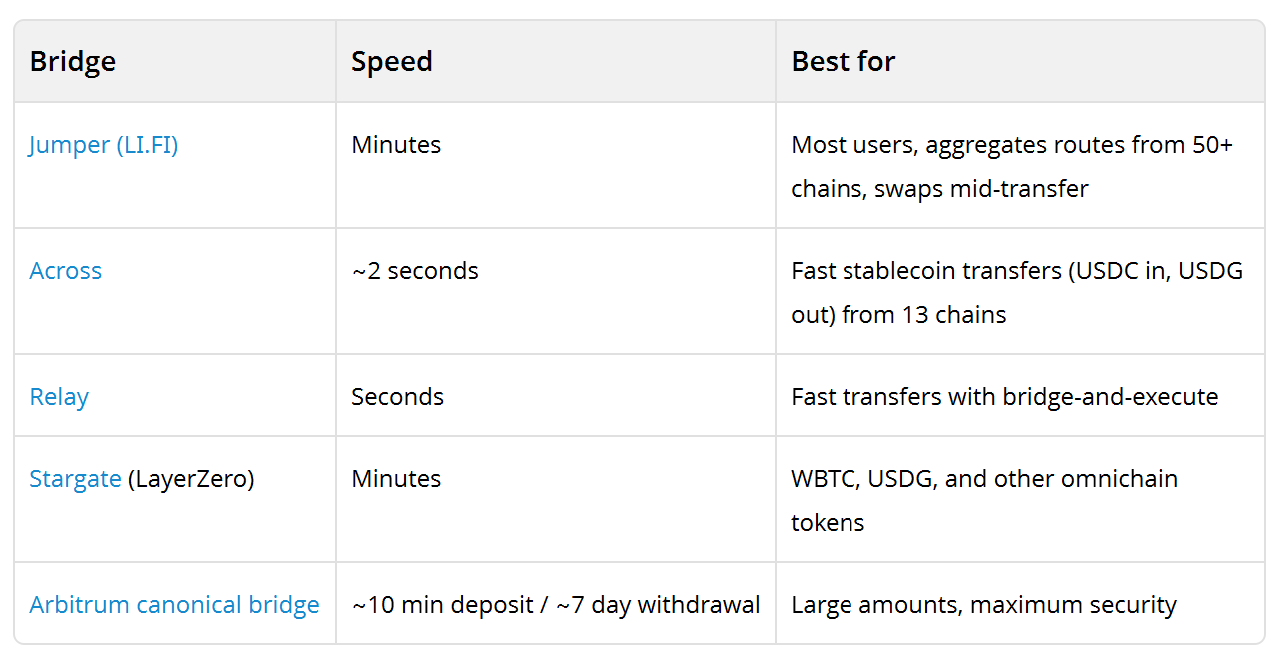
To use Robinhood Chain directly, you'll need funds on the network. Robinhood Wallet handles this natively, but if you're using MetaMask, Rabby, or another wallet, you'll bridge from an existing chain. The official documentation lists one canonical bridge and several fast third-party options:
Robinhood Chain Airdrop: Is One Actually Planned?
No. As of July 2026, there is no Robinhood Chain token and no official airdrop, the network uses ETH for gas, and Robinhood, a publicly traded company, has announced no plans to issue one. Treat any "Robinhood Chain token claim" circulating online as a scam unless Robinhood confirms it through its own channels.
What does exist are ecosystem incentives from apps on the chain: Lighter's $11 million LIT points campaign rewards perpetuals traders (with a 2x multiplier via Robinhood Wallet), and the dYdX team has signaled a future Arcus token with allocations expected for early users. Neither has published official criteria, so don't deploy more than you otherwise would.
Key Takeaways
Robinhood Chain brings one of the biggest names in retail investing onchain. To recap the essentials:
- What it is: an Ethereum Layer 2 built with Arbitrum's technology, live on mainnet since July 1, 2026, and purpose-built for tokenized real-world assets like Robinhood's Stock Tokens.
- How to earn: Robinhood Earn pays an estimated 7% APY on USDG, while the open ecosystem adds lending on Morpho, liquidity provision on Uniswap, and trading incentives on Lighter and Arcus. Check our ratings of the USDG vaults before depositing, as all three currently carry high-risk grades.
- How to get there: Jumper is the most convenient bridge for most users, Across is the fastest for stablecoins, and the canonical Arbitrum bridge suits large transfers. Keep some ETH on hand, since gas is paid in ETH.
- On airdrops: there is no Robinhood Chain token and no official airdrop; only app-level incentive programs exist today.
The chain is young, and both yields and risk profiles will evolve quickly, so verify current rates and ratings before committing funds.

More from Featured

Institutional-Grade Research
Delivered to Your Inbox
Join 12,000 institutional allocators worldwide. No spam, unsubscribe anytime.